Trail Running in April

The good news was precipitation was slightly above normal in April (measured: 1.02″; normal: 0.89″) although it mostly fell as rain and not as snow (measured: 0.3″; normal: 5.0″). The moisture helped keep the trails in great shape. Only towards the end of the month did the trails start to become dusty.

Kelly Canyon

This is an out-and-back that can start from either the top or bottom of the canyon. We chose to start low because there would be water at the confluence of Kelly Canyon and Pumphouse Wash and I wanted to visit it earlier in the day. Good choice.

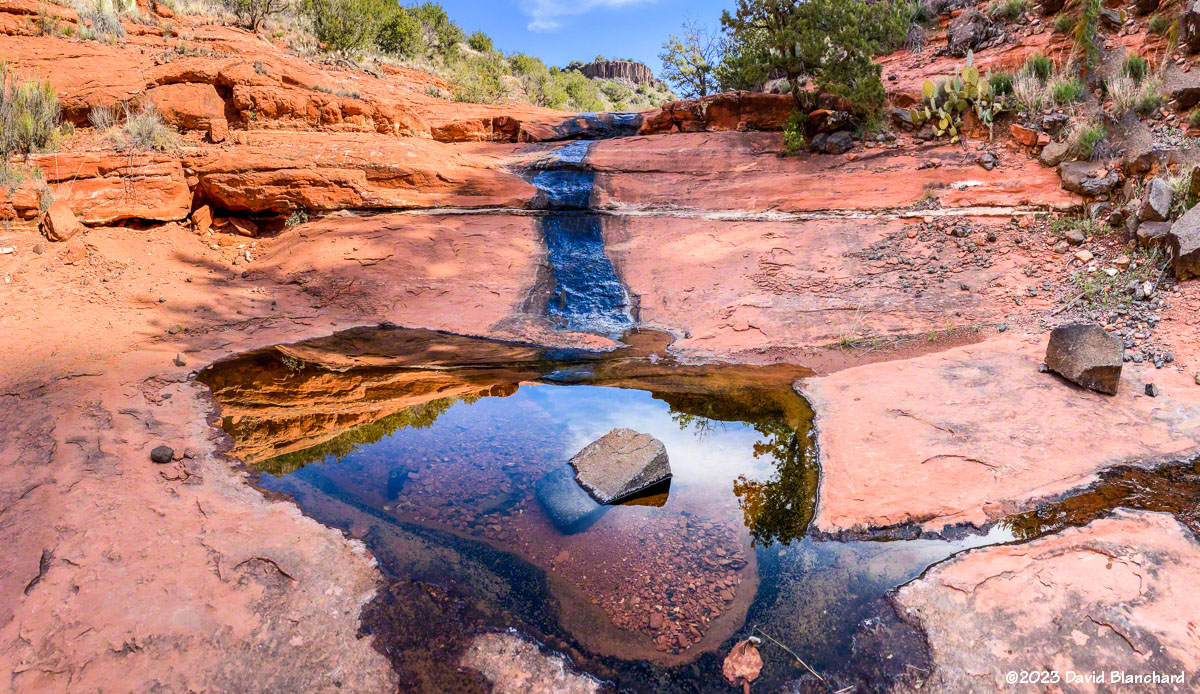
Early morning light at the confluence of Kelly Canyon and Pumphouse Wash.
Mid-morning light at the confluence of Kelly Canyon and Pumphouse Wash.
Some wildflowers (valerian) to gaze at as we run the canyon.
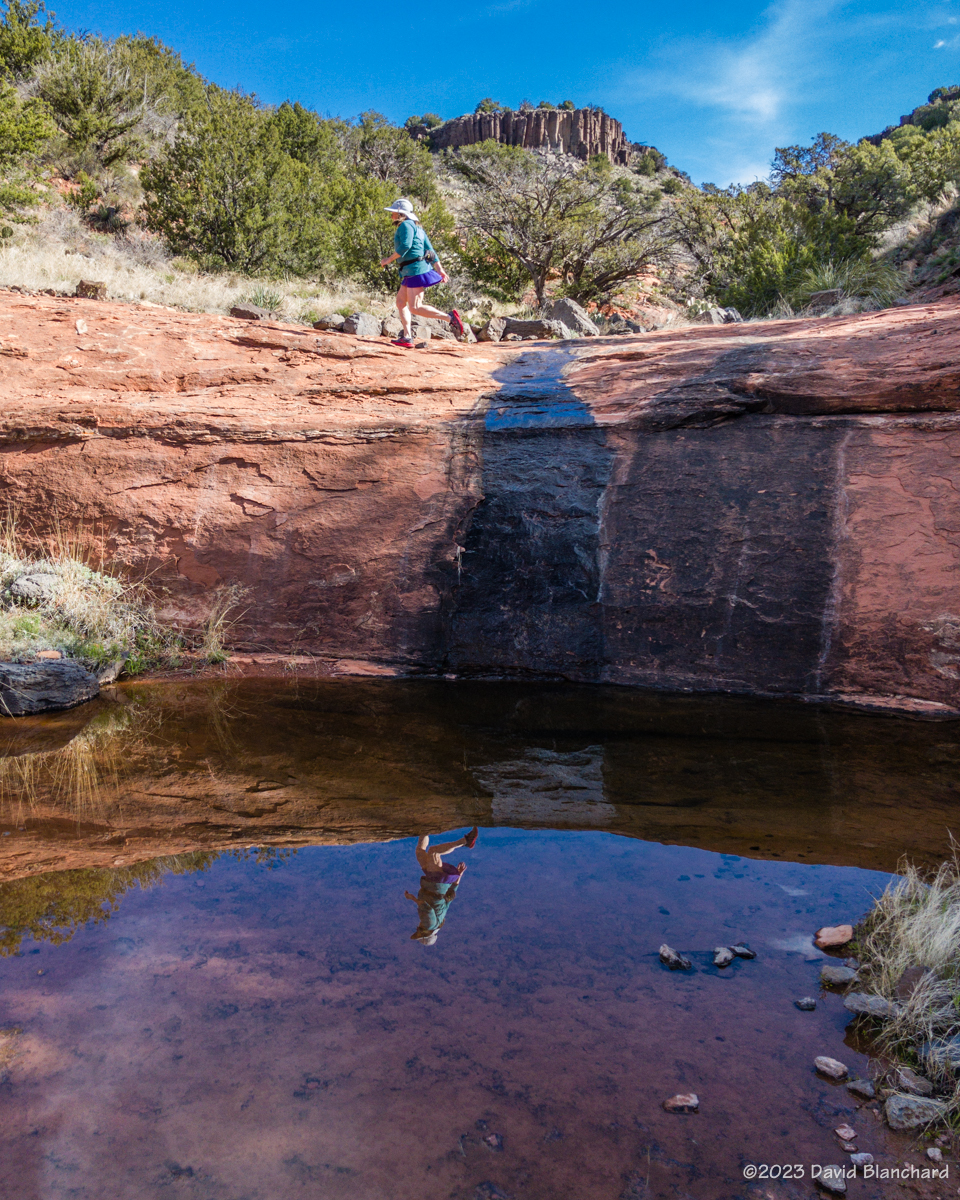
Running up the canyon.
Sometimes you run; sometimes you walk.

Continue reading →

Trail Running–January 2026

The warm weather continues and has allowed us to run in Sedona on dry trails. Trails in Flagstaff, however, tend to be muddy unless you run early enough in the morning when they are still frozen. So we mostly run in Sedona.

Flagstaff FUTS run

Our only run in Flagstaff this month was on New Year’s Day–and it was raining. By the end of the run the trail was getting pretty sloppy.

Public art along the Flagstaff Urban Trail System (FUTS) on a gray, rainy New Year's Day.
Public art along the Flagstaff Urban Trail System (FUTS) on a gray, rainy New Year’s Day.

The Hogs and Chicken Point

This run connects many trails to get a double loop: •Hogwash •Hog Heaven •High on the Hog •Broken Arrow •Chicken Point turnaround •Broken Arrow •Submarine Rock •Broken Arrow

Expansive scenery from the Hogwash Trail in Sedona.
Two runners traverse a sandstone bench on the Hogwash Trail in Sedona. Fortunately it was warm enough that this was water and not ice.

Brins Mesa–Soldiers Pass Loop

A runner ascends the final steps to the top of Cibola Pass. Several large red rock towers can be seen in the distance (Morning Glory Spire on left; Cibola Mitten on the right.
The calendar says January but the weather has been warm and rainy so it is no surprise that wild flowers (Cliffrose) are already blooming.
A panoramic view from the top of Brins Mesa looking towards Wilson Mountain.

Continue reading →

A Visit to Weatherford Trail after the Pipeline Fire

The Weatherford Trail in the San Francisco Peaks has been a popular trail for hikers, mountain bikers (outside the wilderness boundary, of course), equestrians, and trail runners. In the fall, the aspens on the sides of the peaks and especially those in Weatherford Canyon are truly photo worthy.

Start of War Dog Run (walk) on Weatherford Trail.

But in 2022 the Pipeline Fire changed everything. The hillsides were burned leaving only a few lucky surviving trees. The canyon suffered not only the fire but massive flooding in the aftermath. The flooding created 10–20 foot deep gullies on the mountain.

The burned slopes of the San Francisco Peaks quickly come into view on the Weatherford Trail.
New growth crowds the Weatherford Trail.
It may be early October but there are still many wildflowers.
Wildflowers along the Weatherford Trail.
New growth of aspen on the burn scar will result in magnificent displays of fall color in the coming years.

I finally visited a portion of the Weatherford Trail in early October as part of the annual War Dog Run + Walk. The hillsides were covered with the skeleton remains of the trees that burned. But new growth is returning. Once there were stands of ponderosa pine but now there are aspen groves. After just three years these aspen trees stand at five to eight feet tall. And the hillsides are covered in them. Where once a trail traveled through an open forest of ponderosa pine, it now has aspen trees crowding the trail.

A deep gash as the result of flooding on the burn scar.

In the years to come these new aspen forests will bring a mountainside of fall color to the south side of the San Francisco Peaks — just as the massive fires in the late 19th century created the magnificent aspen groves in the Inner Basin region.

Stands of aspen trees in the Inner Basin of the San Francisco Peaks are a result of wildfires in the 19th century.

Fire is a natural part of the forests here. It is painful when the scar is fresh but, in time, it heals itself.


A Quick Visit to Wet Beaver Creek

A few weeks ago we decided to visit Wet Beaver Creek to enjoy a warm day beside the running waters. Rather than hike a few miles up the canyon to the deeper pools we opted to visit the creek near the Beaver Creek Day Use area. It was a weekday and there were only a couple of other visitors. We were able to secure a spot with no one else around (at least until we decided it was time to leave and have lunch). Sitting in the warm sun and then wading into the cool water was refreshing. It won’t be long before autumn weather makes it too cool for this kind of relaxation–but for now it is still an enjoyable way to spend an hour or two. Here are some photos from that morning.

Wet Beaver Creek on a  warm September day.
Wet Beaver Creek on a warm September day.
Plenty of shady spots to sit while listening to the flowing water of Wet Beaver Creek.
Shallow pools of slow-moving water lie on either side of a fast-moving current in Wet Beaver Creek.

Photos shot with a Sony RX100V.

Hiking West Fork Oak Creek—August 2025

In a normal year we would not hike up this canyon in the summer because of the threat of thunderstorms and flooding. But this year has been anything but normal when it comes to rain and the monsoon season. So during one of the many long stretches of dry weather we returned to West Fork Oak Creek canyon and hiked up about 5 miles (or about 2 miles beyond the “end of trail” sign) upstream.

Because of the lack of rain some of the canyon vegetation was stressed. Ferns were already withering. Leaves were turning brown and even falling from the trees. The outlook for a vibrant and colorful fall leaf season isn’t looking good.

But the hike was fine and the water was clear and visitor traffic was low–especially beyond the end of trail.

Blackberries can be found at the very beginning of the trail.
A primrose peaks out from a field of ferns. This was one of the better looking patch of ferns showing mostly green.
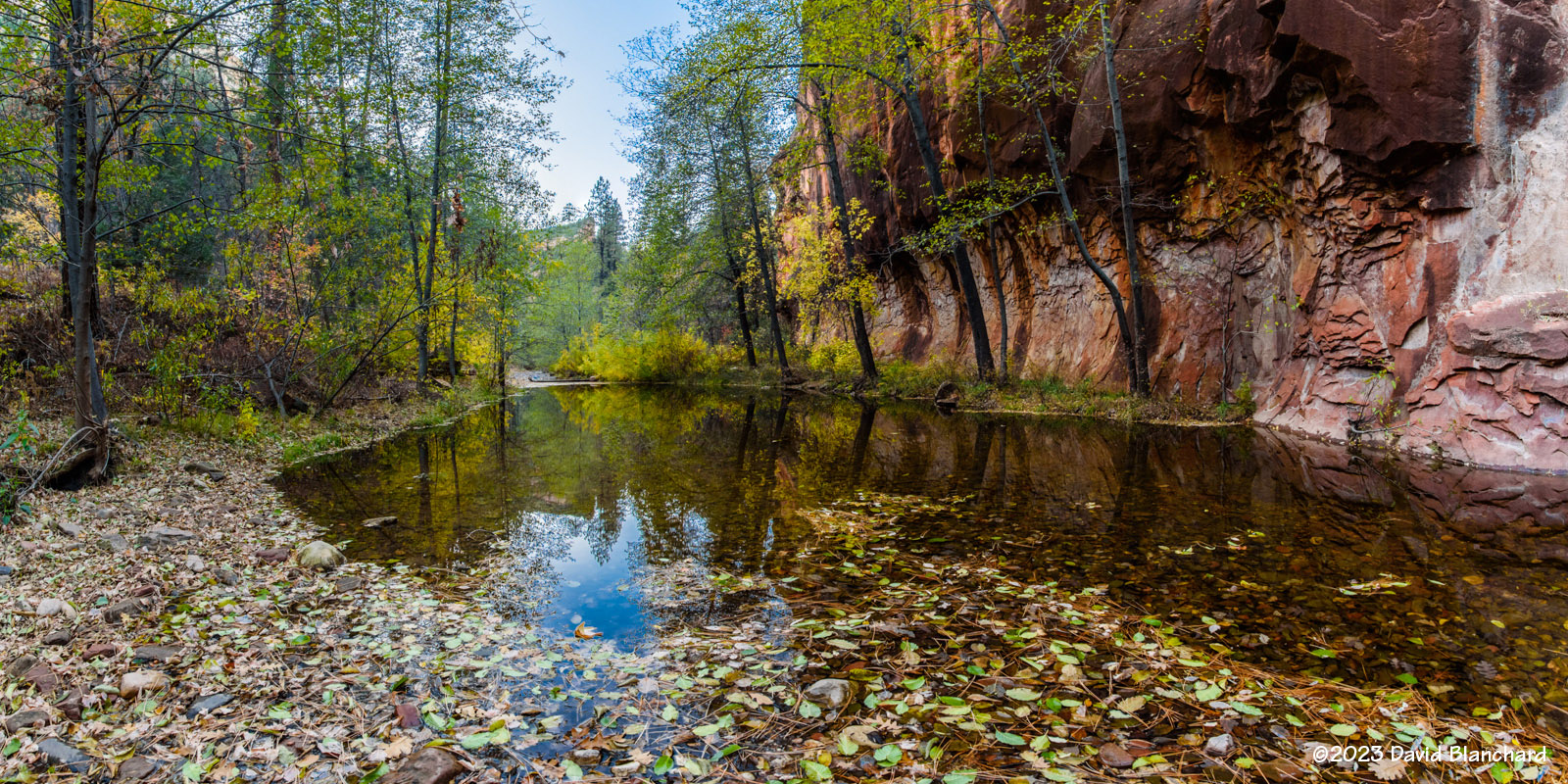
Numerous large reflecting pools can be found in West Fork Oak Creek canyon.
This is the "subway tunnel" at the end of the maintained trail. Hikers can continue upstream for many miles but there isn't much of a trail.
This is the “subway tunnel” at the end of the maintained trail. Hikers can continue upstream for many miles but there isn’t much of a trail.
This is the upstream end of the subway tunnel in West Fork Oak Creek canyon.
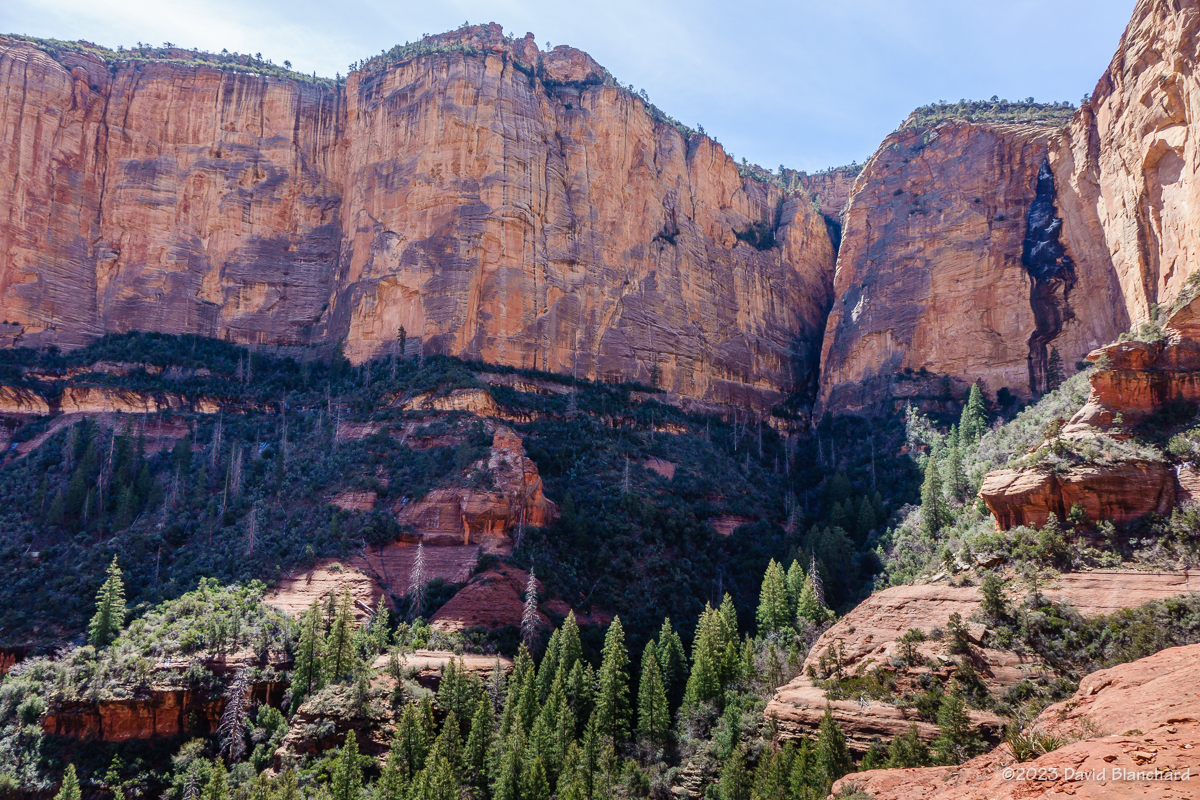
High walls tower above the stream in West Fork Oak Creek canyon.
Upstream there is another set of narrows. This used to be a narrow stream but sand and gravel has dammed the downstream end and now the water is several inches deep.
Looking downstream at the pool and the sinuous curves of the canyon.
Butterflies and wildflowers in West Fork Oak Creek canyon.
A natural amphitheater and wildflowers in West Fork Oak Creek canyon.
Monkshood wildflowers.
Larkspur wildflowers in West Fork Oak Creek canyon.
Lush greenery found in West Fork Oak Creek canyon.
A young deer hides in the tall greenery in West Fork Oak Creek canyon.

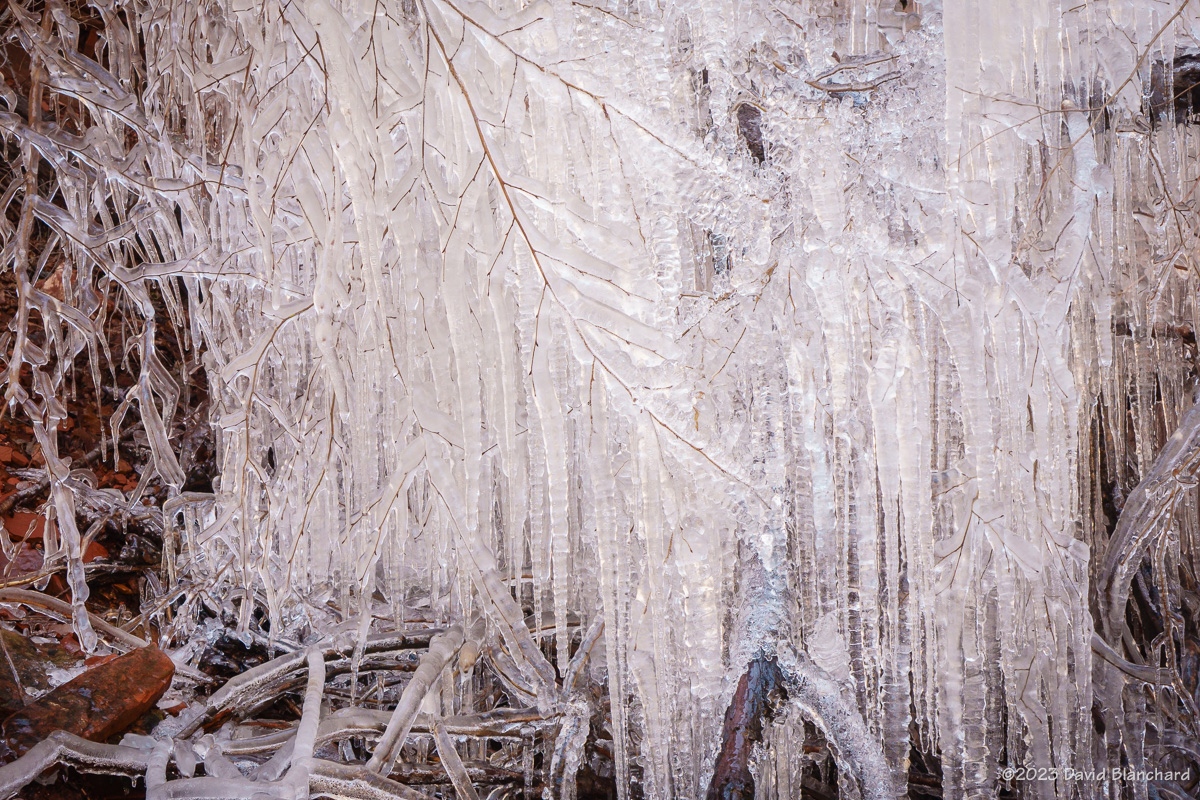
Our next hike up the canyon will probably be in mid winter when ice covers the stream allowing passage through the various narrows.