North American Monsoon—July 2026

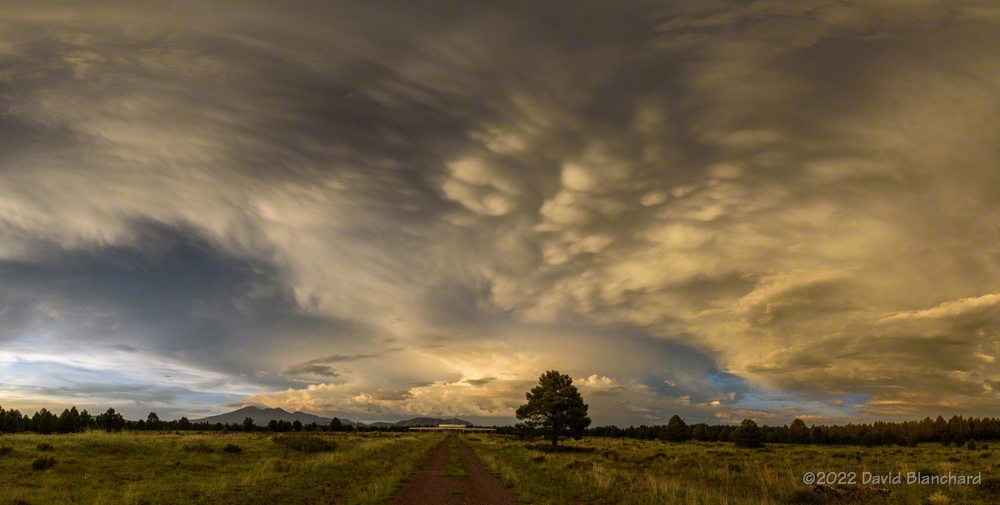
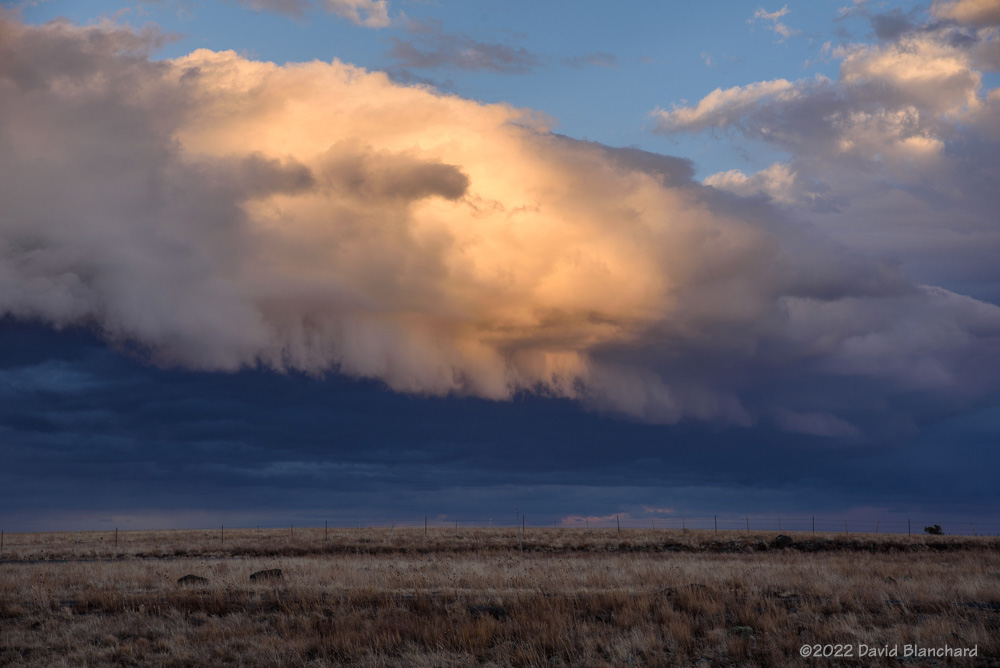
Distant storms produce large anvils with mammatus on the undersides.

We are once again in the North American Monsoon season. This year’s monsoon began slowly with a few false starts in early July but arrived in earnest by the middle of the month. And what a wet period the second half of the month was over parts of northern Arizona. Rainfall measured at the Flagstaff airport was 3.63″ compared to the 30-year (1991–2020) average of 2.61″ and the total period of record (1898–2026) of 2.74″.

07 July 2026

The summer monsoon hadn’t really started yet—but there was enough moisture available to get a few cumuliform clouds and a nice sunset. It was a good practice session for what was to follow.

Light from the setting sun illuminates the base of clouds over Anderson Mesa in northern Arizona.
A few clouds glow with the light of the setting sun while smoke from the Pocket Fire can be seen just above the horizon.

18 July 2026

Monsoon moisture finally arrived and big storms were present. The sunset light on the clouds and rain was remarkable!

Several large thunderstorms over central Arizona.
As the sun set it illuminated both clouds and rain creating this amazing red sunset sky.
Add a bit of lightning and the sky becomes truly wild.
A few more lightning flashes light up the sky with the San Francisco Peaks visible in the distance.
Cool, moist outflow from distant storms created this impressive shelf cloud.

Continue reading →

An Early but Brief Start of the Monsoon

The North American Monsoon got an early start in northern Arizona this year with copious amounts of precipitation over the San Francisco Peaks and surrounding areas. Unfortunately, we are now experiencing an extended monsoon break with mostly clear skies and hot temperatures.

Here are some photograph taken during that wet period.

A partial rainbow over Upper Lake Mary near Flagstaff, Arizona.
The rainbow is gone but sunset colors are seen in the clouds and the reflection in the lake.
A partial rainbow over the grasslands of Wupatki National Monument.
A zoomed-in segment of the rainbow showing supernumary bows.
Sunset at Wukoki Pueblo in Wupatki National Monument.

Here are the June rainfall totals from the Flagstaff rain gauge network.

June rainfall totals for the Flagstaff raingage network.

Clouds at Sunset at Rogers Lake

The past week has featured dry conditions with mostly cloudless skies. That changed on Wednesday as a weak disturbance moved across the Southwest and brought a bit of moisture to the area. By afternoon it was evident that there would be some interesting clouds at sunset so we headed to Rogers Lake County Natural Area, located a few miles southwest of Flagstaff.

A view of the San Francisco Peaks reflected in the shallow waters of Rogers Lake.

Our first stop was at the southern end of the lake which allowed us to take photographs over the water looking towards the San Francisco Peaks. The winds began to calm as the sun lowered in the west providing interesting reflections of the peaks in the smooth water. Note: lots of bugs but they weren’t annoying.

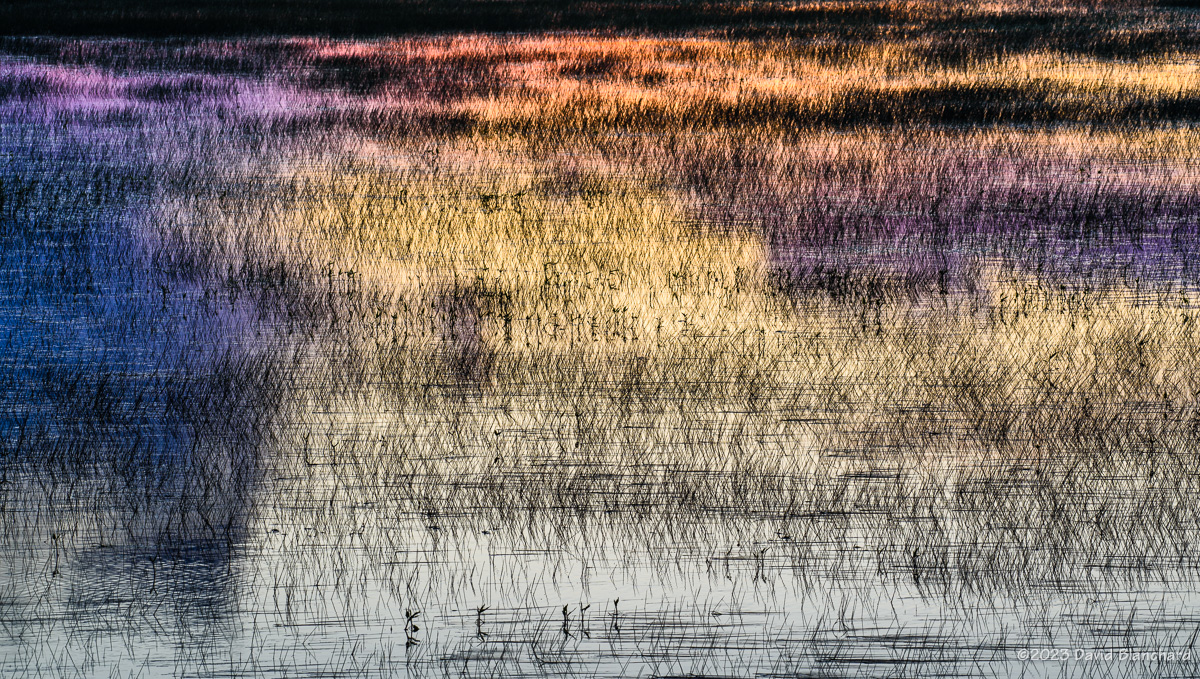
Sunset over Rogers lake from the northern viewing area. Wetland grasses are already growing tall in the shallow waters of the lake.
A zoomed-in view of the wetland grasses and sunset reflections on the waters of Rogers Lake.

We then moved to the northern viewing area to shoot photos across the lake and towards a band of shallow convective clouds and the sun. There was a period of a few minutes in which the colors were greatly enhanced. I was using a 24–120mm lens for most of the early photographs but switched to a 200–500mm lens for some closeup photographs of the water. The wetland grasses were growing out of the shallow water and created an interesting abstract photo, especially with the sunset colors reflected on the water.

Panoramic view of Rogers Lake at sunset.

The panoramic image was shot using an iPhone.

The forecast calls for several more days with clouds and showers so there may be additional opportunities.

Clouds at Sunset

Storms were moving across the region and there was a chance of rainbows developing. But, in the end, the geometry was not right with the heavy rain in the wrong location for rainbows. Instead, we got these colorful clouds as the sun began to set.

I was happy with the results.

Sunrise, Sunset, Rainbows, and Fog

The North American Monsoon continues to bring convective activity to much of northern Arizona on a daily basis. There have been plenty of opportunities for colorful sunrises and sunsets as well as rainbows and even some fog.

Light rain showers are illuminated by the rising sun over Anderson Mesa.
A partial rainbow appears right after sunrise over Mormon Mountain.
Early morning light on Upper Lake Mary.
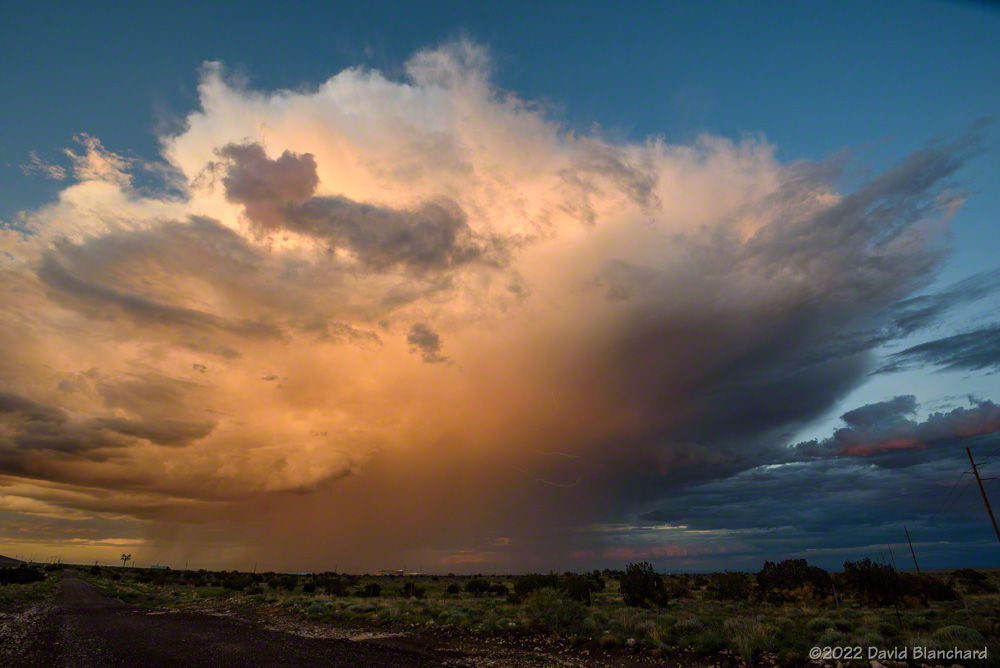
Sunset colors illuminate a thunderstorm near Twin Arrows.
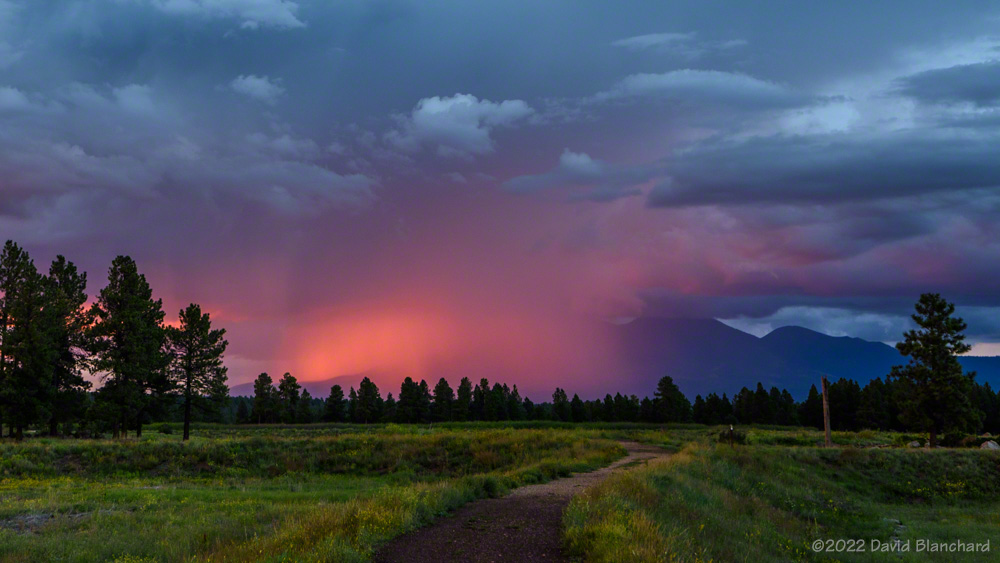
The setting sun briefly illuminates heavy rain falling on the San Francisco Peaks.
Light rain from a dissipating thunderstorm is illuminated by the setting sun.
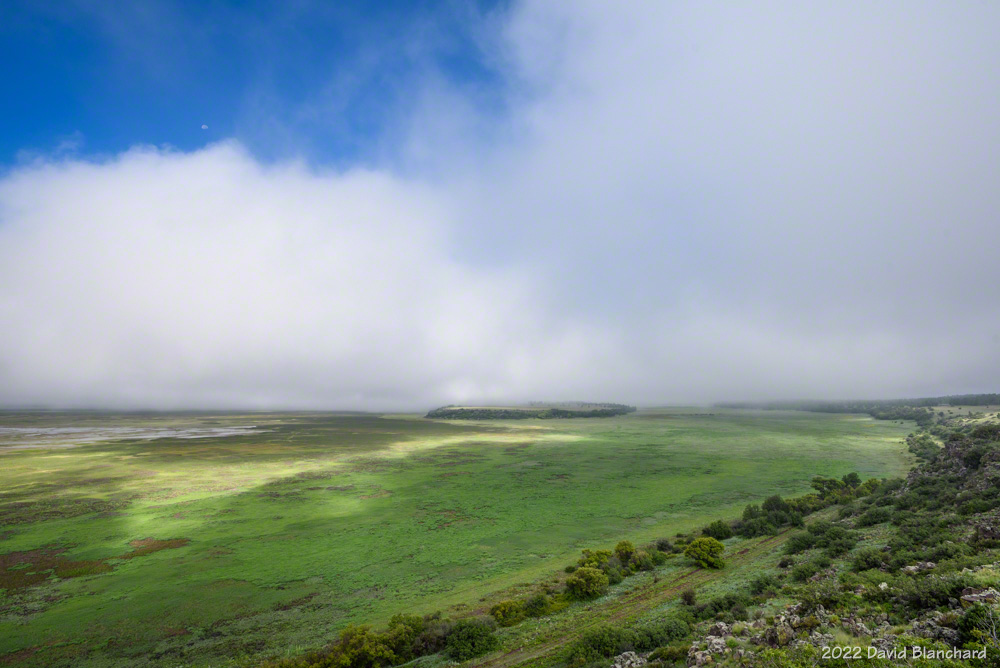
The almost daily rainfall has resulted in many opportunities for morning fog.

The rainy season should continue for at least a few more weeks so there should be additional opportunities for colorful photographs.