Aurora Borealis: 11–12 November 2025

The Sun remains active even though it has probably passed Solar Max—and auroras once again visited low latitudes, including northern Arizona. The geomagnetic storm forecast indicated auroras were likely into the middle latitudes with a chance of appearing at low latitudes. I was ready to view the aurora but the weather was uncooperative. Clouds increased during the day and by sunset a layer of high clouds covered the region. But an hour or two later I was able to see stars overhead (but not low on the horizon) so I decided it might be worth the effort.

It was worth the effort.

As we did for the October 2024 event, we watched and photographed the aurora from Ashurst Lake near Flagstaff, Arizona. I was again hoping to capture reflections of the aurora on the still waters of the lake and was successful. I even managed to capture an image with a heron standing in the shallow water and silhouetted by the bright aurora to the north.

At first the aurora was faint and clouds in the north blocked the view. Gradually, the clouds moved out of the way. And, then, between about 2135 and 2155 MST (0435 to 0455 UTC 12 November 2025) there was a strong substorm that lit up the sky. It was bright enough to illuminate the landscape and even cast faint shadows.

The aurora was seen as far south as latitude 13°N in El Salvador!

Here are a few still images and a time-lapse video. Images were shot with a Nikon D850, Tamron 12mm fisheye lens, ISO 3200, ƒ/4, 15 seconds.

The beginning of the substorm at 2140 MST (0440 UTC). Numerous pillars are visible across the northern sky (12mm fisheye lens).
A few minutes later (2148 MST; 0448 UTC) a SAR (Stable Aurora Red) arc appears above the pillars.
A heron wades in the shallow water of Ashurst Lake and is silhouetted by the bright aurora in the north.

Time-lapse video from 1948–2226 MST (0248–0526 UTC). Very little activity is present at first but then the substorm erupts with numerous pillars developiing along with a SAR (Stable Aurora Red) arc the propogates upgward. And all of this is reflected in the lake.

And there may be yet more big events during this solar cycle!


Here is some additional information about this aurora and current solar cycle.

From Forbes.com:

Some of the strongest and most widespread displays of auroras since Oct. 10, 2024, occurred overnight on Tuesday, Nov. 11, into Wednesday, Nov. 12, according to NOAA, caused by one of the most powerful G4-rated geomagnetic storms of the current solar cycle.

The potent geomagnetic storm occurred after two particularly fast-moving coronal mass ejections — clouds of charged particles from the sun — erupted from the sun on Sunday, Nov. 9, and Monday, Nov. 10, in the wake of an X1.7 and X1.2-class solar flares. It left space weather scientists on high alert this week.

The last three major events from the current solar cycle are shown in this table from Wikipedia:

30 April – 12 May 2024 May 2024 solar storms X1.2(X1.3)-class flares[95] and X4.5-class flare.[96] The flares with a magnitude of 6–7 occurred between 30 April and 4 May 2024. On 5 May the strength of the solar storm reached 5 points, which is considered strong according to the K-index. The rapidly growing sunspot AR3663 became the most active spot of the solar cycle 25. On 5 May alone, it emitted two X-class (strongest) flares and six M-class (medium) flares. Each of these flares resulted in a short-term but profound disconnection of the Earth’s radio signal, resulting in signal loss at frequencies below 30 megahertz (MHz).[97]

An extreme (G5) geomagnetic storm alert was issued by the National Oceanic and Atmospheric Administration (NOAA) – the first in almost 20 years.[98][99] The final storms reaching the highest level of NOAA’s G-scale before solar cycle 25 occurred in 2005 in May,[100][101][102] August,[103] and September, respectively.

With a NOAA rating of G5, an estimated peak Dst of −412 nT, and aurorae seen at far lower latitudes than usual in both hemispheres, this geomagnetic storm was the most powerful to affect Earth since November 2003. A later study estimates a Dst peak of −518 nT, meaning the strongest storm since 1989 and the second strongest since 1921.[71]

Oct 2024 October 2024 solar storm Triggered by an X1.8 solar flare that produced a relatively fast CME.[104][105] The storm reached a peak Dst of −341 nT.[106] Auroras seen as far south as Cuba.[107]
Nov 2025 November 2025 solar storm Auroras seen as far south as Central Mexico.[108]


March Snow in northern Arizona

Another winter storm moved across northern Arizona on Friday and Saturday dropping several inches of snow. Clouds began to clear Sunday morning just before sunrise setting up the possibility of a great sunrise. Well—it was a great sunrise at my location but a small patch of low clouds blocked the sun from shining on the San Francisco Peaks.
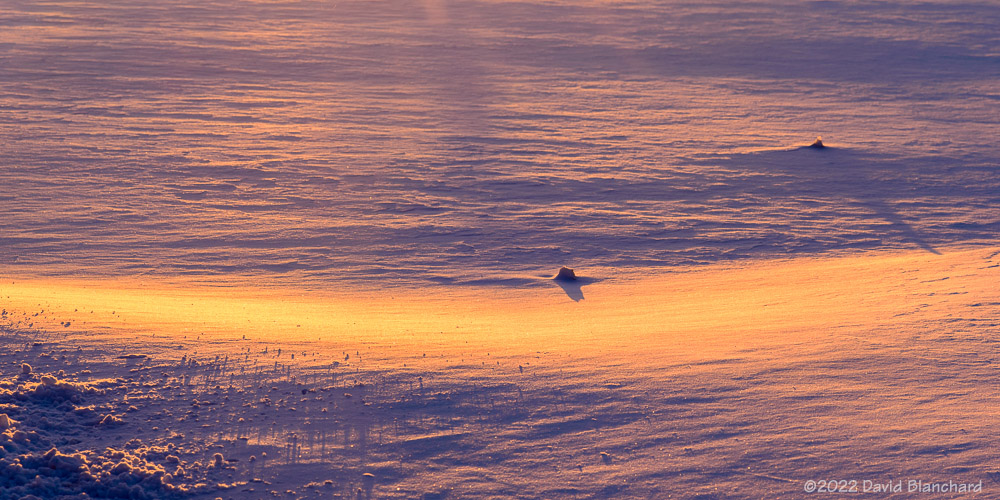
First light illuminates freshly-fallen snow.

Time to shoot photos of something else. Here is an image as the first sunlight hits the snow in front of me. The sun angle is so low that the slightest undulations in snow create long shadows.
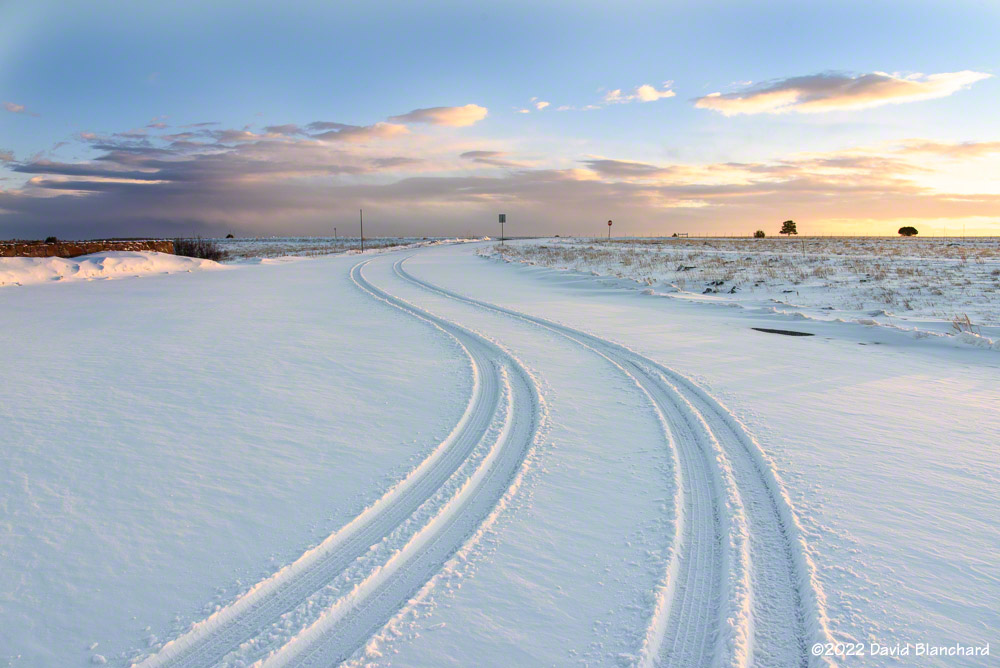
Tire tracks in the snow.

Tire tracks in snow are interesting, aren’t they? Taken just a few minutes later as a bit of cloudiness moved in front of the sun.
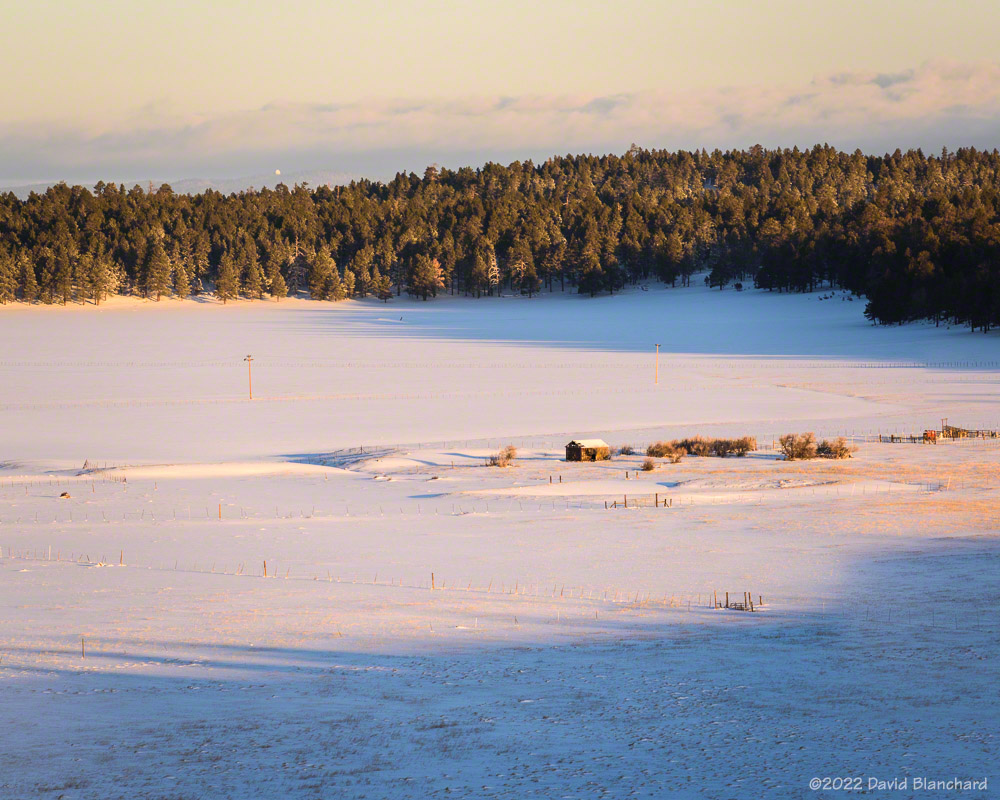
Old ranch buildings near Mormon Lake.

There are a couple of old buildings in the meadow near Mormon Lake and the sun and clouds provide a natural spotlight on the old ranch.
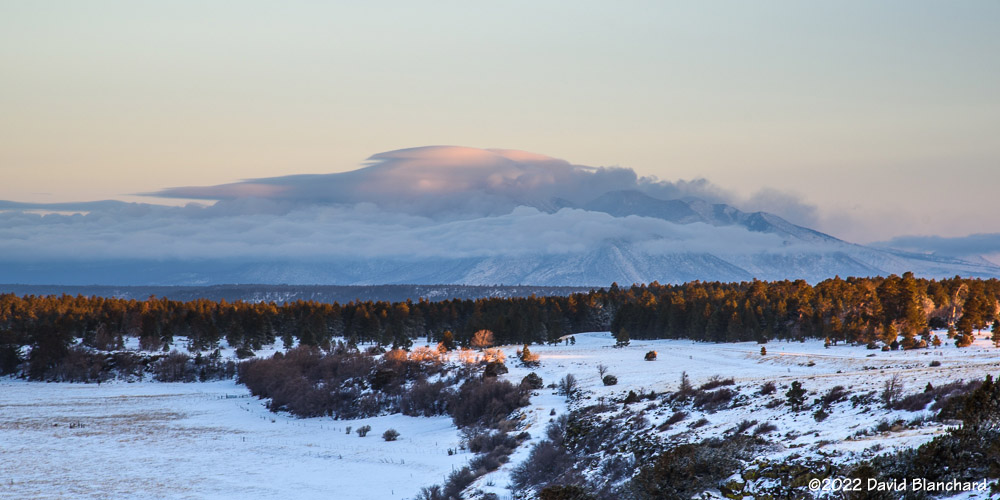
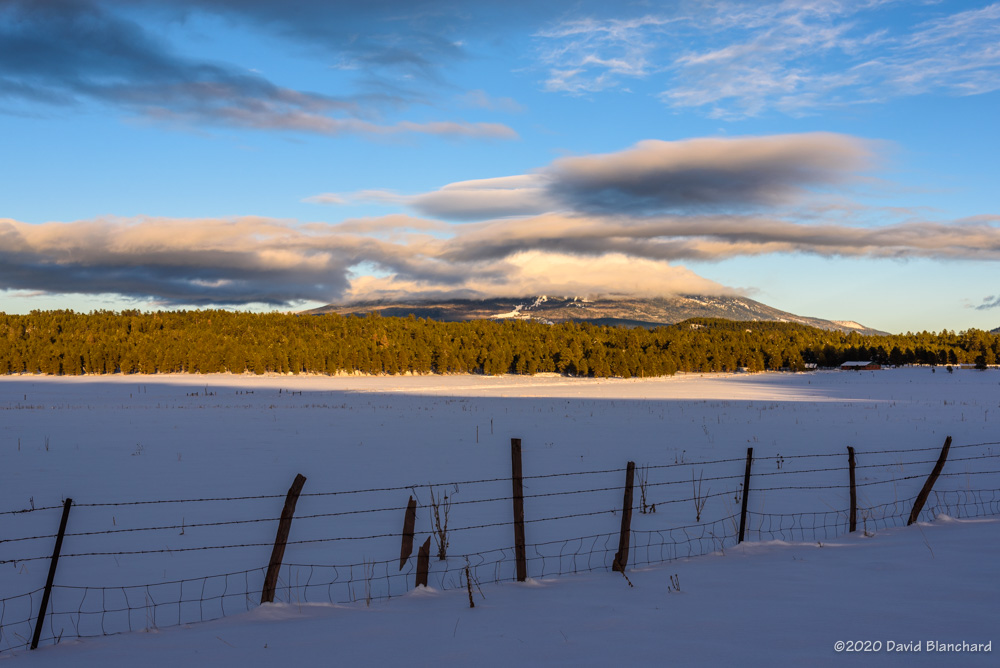
Clouds blow across the top of the San Francisco Peaks in the wake of a departing storm.

Here is an image of the San Francisco Peaks with just a bit of light striking the highest clouds.

Finally, a short time lapse video of the peaks and clouds. Note the sinking motion along the eastern edge of the peaks as well as the hydraulic jump farther downstream.
Morning Fog at Mormon Lake

A few days of tropical moisture—remnants of Tropical Depression Nora—brought widespread rainfall to much of northern Arizona. As the moisture was replaced by drier air in the middle- and upper-levels but was unchanged in the near-surface layer, we were left with a situation in which fog might form in the early morning hours.


So, up before dawn to drive out to Mormon Lake and the surrounding basin. And there was fog—at least in one corner of the basin. Here is a 30-minute time lapse compressed down to 17 seconds showing the movement of the fog as it sloshes back and forth.

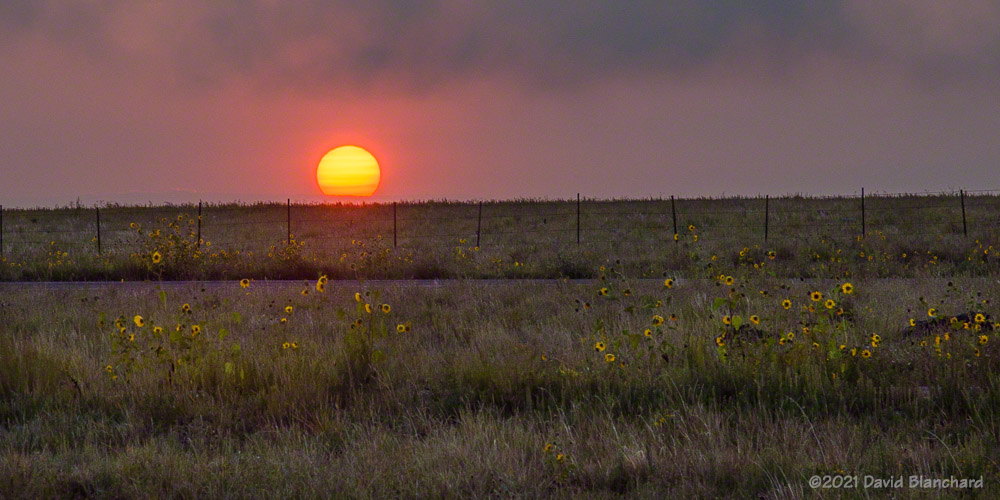
Sunrise through morning fog.

As this was taking place, the sun rose through a shallow layer of fog.

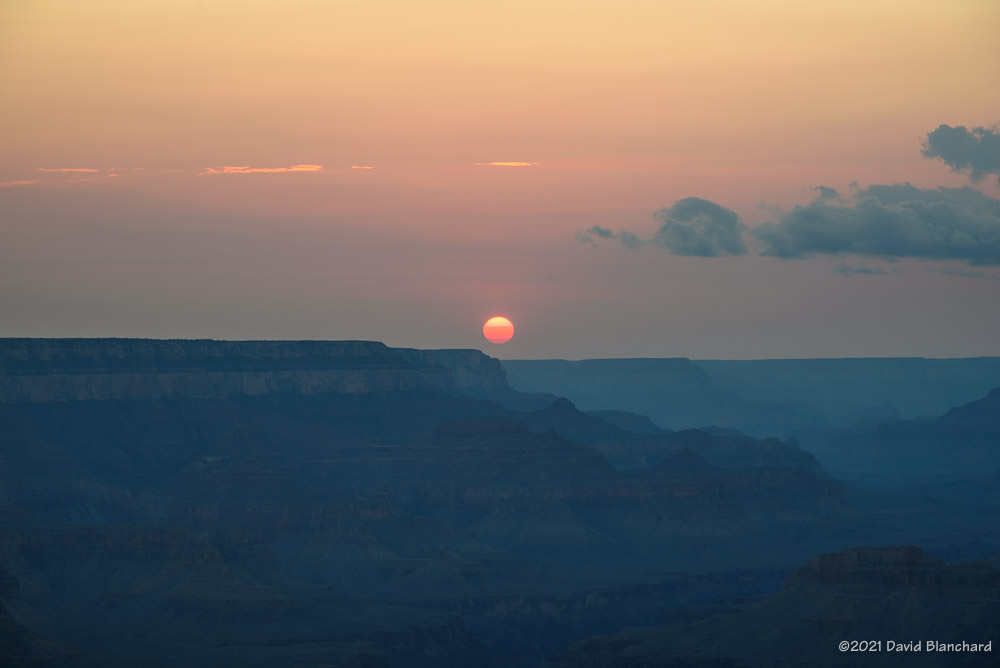
Sunset at Grand Canyon.

Bonus: on the previous evening the sun was setting through layers of smoke from the western wildfires.

Edit: updated image.

Thunderstorms and Lightning

The North American Monsoon has been sputtering—for lack of a better term—the past week or two. We get a few days of storms followed by a hot and dry period. Finally, however, moisture is beginning to increase and we are seeing more storms. I have tried several times this year to get great photographs of storms and lightning but my success rate has been pretty low.

Here are a few photographs from the past week.

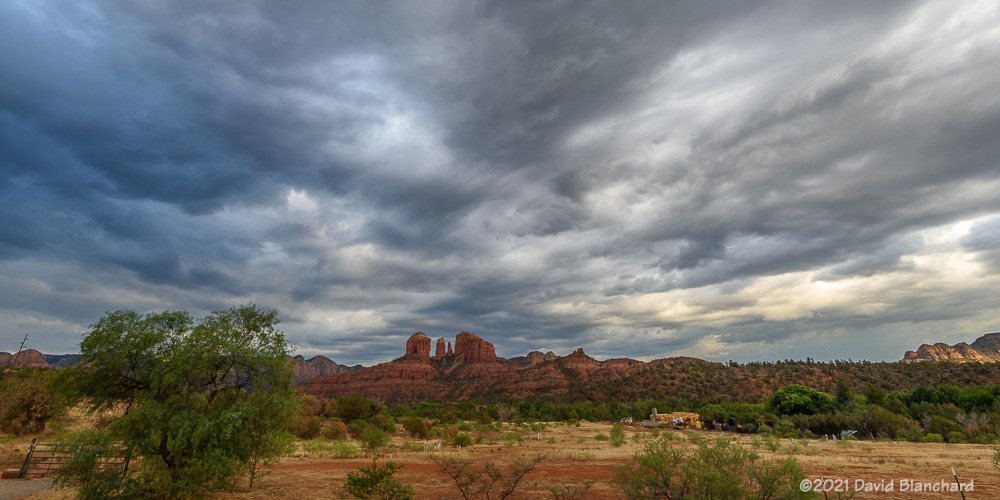
Clouds develop across the whole sky in Sedona.
An outflow boundary arrives and thunderstorms develop within a few minutes.
A distant thunderstorm seen from Wupatki National Monument.
Mid-afternoon lightning near Mormon Lake.

And, finally we have a time lapse of the same storm that produced the lightning above. The video is 200x real time; from the motion it can be seen that the storm has some slow rotation. This storm moved off the higher terrain and became severe as it neared the Camp Verde area.

The weather models have been consistent with forecasting a significant increase in storm activity next week.

Wave Clouds over the San Francisco Peaks

New Year’s Day brought some interesting wave clouds to the San Francisco Peaks. I headed west to Brannigan Park to get both good views of the clouds and sunset colors on the peaks. In addition, I shot time-lapse video that shows the amazing motion of the wave cloud above the peaks and the cap cloud that obscures the summit.

Clouds over the San Francisco Peaks.
Wave clouds above the San Francisco Peaks.

Time-lapse video of wave clouds and cap clouds.

And then there were these thin, wispy clouds catching the light of the setting sun.